For Press
Press & Media
FriendsHAUS is a private social advisory that helps gay men build lifelong friendships and genuine belonging. Founded in Los Angeles by J'Net Nguyen.
Below is J'Net's story, the facts of the practice, and everything you need to write about FriendsHAUS. We have kept it short on purpose, and left the angle to you. Journalists have found stories here on modern friendship, on chosen family as a way of building a life, on what belonging costs and why it has become the real luxury, and on why it is so strangely hard to make real friends in LA.
For anything not on this page, write us directly.
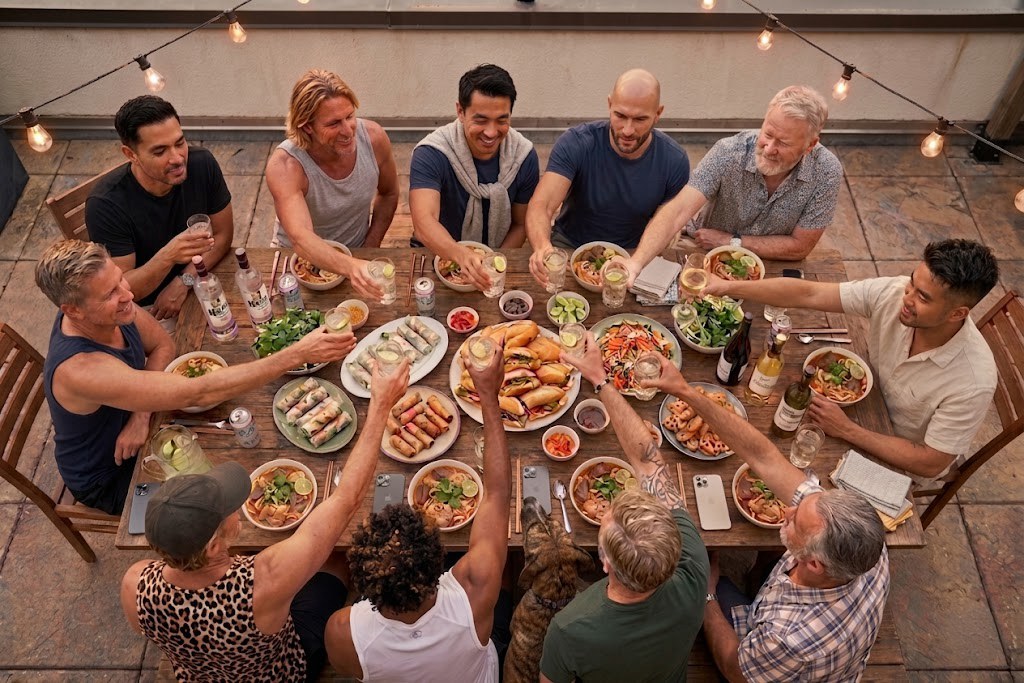
The Origin
How FriendsHAUS began.
FriendsHAUS did not begin as a business. It began with the love that raised her.
J'Net Nguyen is the daughter of Vietnamese refugees, people who worked relentlessly to build a life in a new country. They loved her fully, but there were parts of growing up as an Asian American girl, the culture clash she was living through, the particular needs of a young woman finding herself, that they could not always meet, because they were navigating that same unfamiliar country themselves. The gay men in her life met her there. They gave her creativity, confidence, and joy. They celebrated her at every stage, even in the years when she was still unsure of her own direction, still growing into herself. So much of who she is, her outlook, her spirit, the way she moves through the world, she owes to the men who helped raise her. She learned from them that family is not only the one you are born into. It is also the one you build.
And she learned it early, in a specific place. Her mother owned and ran a beauty salon, the kind that becomes a neighborhood's living room, and J'Net came up inside it, surrounded by a wide and varied clientele, absorbing young how people from every walk of life find comfort and connection in the same room. It was there, through her mother's chair, that she first came to know many of the gay men who would go on to shape her, at a time when the world was far less welcoming to them than it is today. The salon was her first lesson in belonging, and her first family beyond the one she was born into.
“Gay men gave me my creativity, my confidence, and my joy. What I’m doing now isn’t paying them back. It’s carrying the torch.”
That is where FriendsHAUS truly begins. Not as a service she invented, but as something she is giving back to the community that gave her everything.
So it was no accident that, years later, gay men across LA began coming to her during the moments that matter most. Some were relocating. Some had just come out. Others were moving through a new chapter and wanted a social life that finally felt like their own. They came to her because she offered something rare, a space where they felt understood and genuinely cared for, and because she had a gift that was difficult to explain but impossible to miss. She knew, almost on sight, which people belonged in one another's lives.
“When someone finally finds their people, you can see it. There’s a glow. There’s a quiet confidence that says, ‘I’m okay. I belong. I’m not doing life alone anymore.’ That’s the power of belonging, and it’s something success can never provide by itself.”
Her introductions were never about networking, and never about shared hobbies or industries. She made them with a much longer horizon in mind. She was not asking who might get along at dinner. She was imagining who would still matter years later. Who would invite each other to birthdays and holidays. Who would take trips together, show up at the hospital, celebrate the promotion, and quietly become part of each other's everyday lives.
Those were the introductions worth making, and the lives they changed were real. A man who had just come out arrived without a single gay friend and now cannot keep up with the invitations, more at home in himself than he has ever been. Others became Friendsgiving hosts, standing gym partners, the first call after good news and bad.
People came to her, and she helped however she could. She loved it. She still does. In many ways it is her life's purpose. But there was only one of her. Where most people guard their contacts, she gave hers away freely, and she never explained why. She simply put things in place. She engineered the connections quietly, arranging the support around these men without their ever seeing the design, so that long after any conversation with her ended, someone would still be there.
That was the whole intention, and it never changed. She had watched too many accomplished men do everything right and still arrive somewhere new with no one to call. Much of it, she came to understand, starts early. The drive to succeed, to prove something through work and money, can grow out of the shame and guilt some men carry about their sexuality. Success demands that you become singular for a while, and so the social life, the friendships, the quieter parts of a person get set aside. It is only after arriving that many realize how much those years cost them, and begin the difficult work of catching up.
We spend years, and enormous intention, building our careers, and we leave the friendships that outlast those careers almost entirely to chance. J'Net refuses to treat that as simply the way adult life works. It was a problem to be solved, and she was rare in knowing how.
So she stopped leaving it to luck and made a practice of it. One introduction at a time, then through gatherings designed to bring the right people together at scale, spaces where connection could form on its own rather than by force. Real friendship has a way of spilling over. Some of the men she introduced went on to build companies together. Some found love. But J'Net has always been clear about what she is and is not.
“I’m not a matchmaker, and this isn’t a networking service. I help gay men build healthy social ecosystems. Love and opportunity do come out of that, and that’s a wonderful bonus. But friendship is always the focus, because that’s the part that decides whether you actually like your life.”
As introductions turned into lifelong friendships, her mentors and closest friends, many of them gay men who had lived this work firsthand, urged her to offer it beyond her own circle. Referrals arrived from people she had never met. Then came the question she had not expected: "Can I hire you?"
That is when FriendsHAUS took its name. Not because J'Net set out to build a business, but because she finally understood what she had been building all along, and how far back it went.
The name was never incidental. Think of a friend's house, the one where you can exhale the moment you walk in. Where you are welcomed, accepted, and known. Where you can be vulnerable without cost, where celebrations happen, where memories are built. A place that is theirs and somehow also yours. That feeling, comfort, safety, belonging, joy, is what J'Net has spent her life creating for people. It is the whole idea in two words.
You can build a life that looks, from the outside, exactly like what you wanted. FriendsHAUS is for everything the outside cannot see.
The Bigger Picture
The rise of the friendship economy.
Something is shifting in how adults build their social lives. You can have the career, the visibility, the full calendar, and still be missing the friendships that actually hold a life together, and LA feels that gap more than most. J'Net works at the center of it.
Adults are outsourcing what used to happen naturally.
Friendship once formed on its own, through the neighborhood, the office, the family down the street. Those structures have quietly dissolved, and adults now build deliberately what they once found by default. J'Net sees it up close: accomplished people who can build almost anything, discovering that a real social world is the one thing success does not hand you.
The hidden cost of relocation.
Companies spend enormously to move their best people, then watch some of those moves quietly fail, rarely because of the job, almost always because the person never built a life around it. J'Net works at exactly that seam, where talent strategy meets the human need to belong, and where the smartest companies are starting to treat community as part of retention.
Belonging is becoming the real luxury.
The markers of success have never been easier to acquire or mattered less to how a life actually feels. What people want now, real connection and a place to belong, cannot be bought off a shelf, and J'Net watches that shift play out among people who have already reached the top of everything else.
Friendship, made intentional.
If belonging can no longer be left to luck, the answer is to build it on purpose. That is the practice at the heart of FriendsHAUS, and the through-line of everything J'Net does: friendship treated not as something that happens to you, but as something you can build well.
About & Facts
Everything your editor and fact-checker need.
FriendsHAUS is a private social advisory that helps gay men build lifelong friendships and genuine belonging. Founded in Los Angeles by J'Net Nguyen, it serves individuals navigating relocation, coming out, and other life transitions, as well as companies supporting the wellbeing of relocating and retained talent.
Free to use verbatim. Preferred attribution: FriendsHAUS, friendshaus.com.
- Practice
- Private social advisory
- Founder
- J'Net Nguyen, principal advisor. Master's in Marketing and Communications Management, University of Southern California.
- Location
- Los Angeles, California
- Serves
- Individual clients navigating relocation, coming out, and life transitions, and corporate clients supporting relocating and retained talent.
- Structure
- Individual engagements, delivered personally by the founder.
- Website
- friendshaus.com
Assets and Quotes
Take what you need.
Images and quotations below are cleared for editorial use. No approval needed.
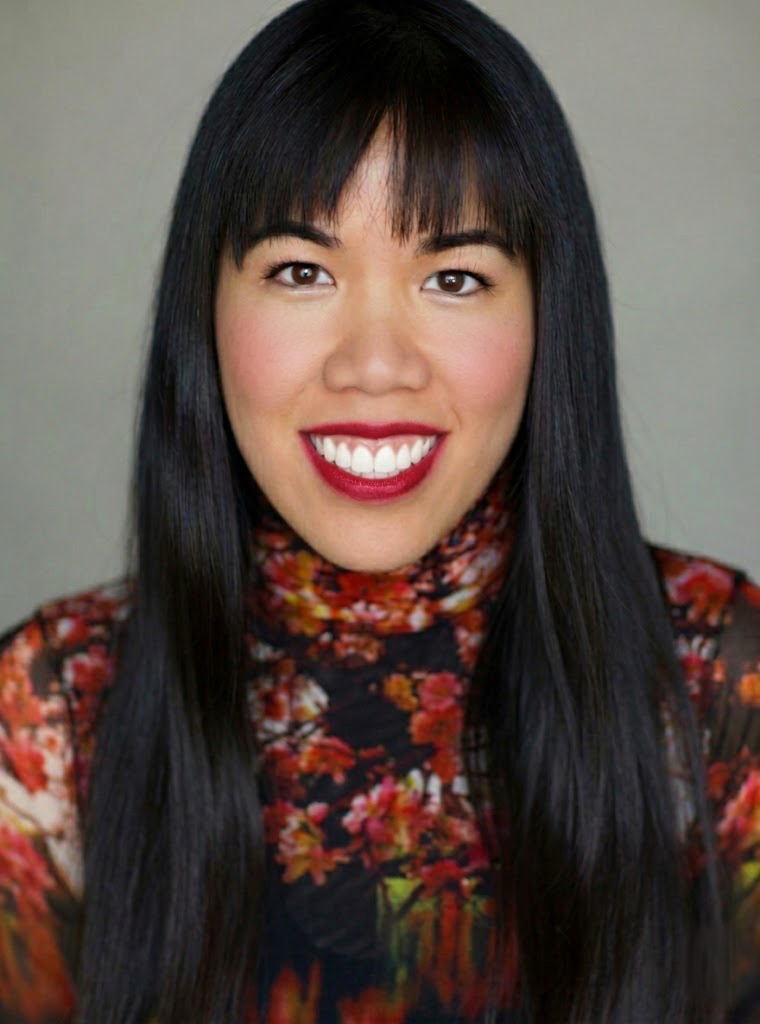

Quotations from J’Net Nguyen
“I’m not a matchmaker, and this isn’t a networking service. I help gay men build healthy social ecosystems. Love and opportunity do come out of that, and that’s a wonderful bonus. But friendship is always the focus, because that’s the part that decides whether you actually like your life.”
“When someone finally finds their people, you can see it. There’s a glow. There’s a quiet confidence that says, ‘I’m okay. I belong. I’m not doing life alone anymore.’ That’s the power of belonging, and it’s something success can never provide by itself.”
“Gay men gave me my creativity, my confidence, and my joy. What I’m doing now isn’t paying them back. It’s carrying the torch.”
Press Contact
For anything not on this page, write us.
J'Net is available for interviews and speaking. Write to inquire@friendshaus.com.